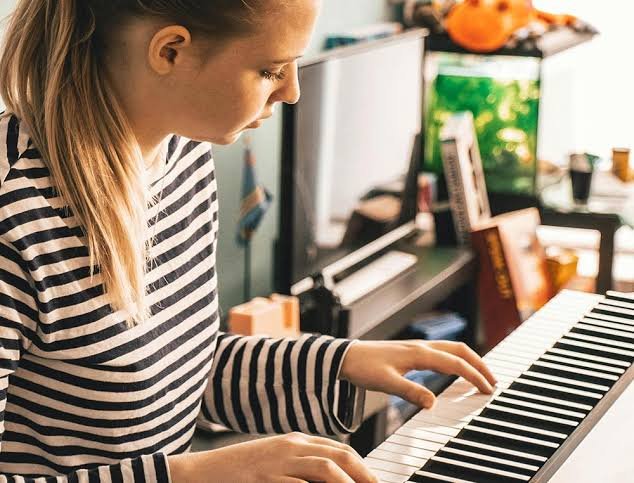

Learning piano requires patience, repetition and a willingness to improve gradually. While lessons provide direction, regular practice at home helps learners develop familiarity with the keyboard and strengthen their musical skills.
A good practice routine does not need to be complicated. It should be realistic, structured and suited to the learner’s current level. Choosing an appropriate instrument and creating a comfortable practice environment can make this process easier.
Set Clear and Achievable Goals
A practice session is more effective when it has a clear purpose. Instead of trying to learn an entire piece in one sitting, divide it into smaller sections.
A beginner might focus on hand position, reading a short passage or playing a simple scale. A more experienced student may work on timing, dynamics or difficult transitions.
Goals should be specific enough to guide practice but flexible enough to allow for gradual progress.
Choose an Instrument That Supports Learning
The instrument plays an important role in the practice experience. A digital piano with touch-sensitive and appropriately weighted keys can help learners explore control and musical expression.
The number of keys should also be considered. An 88-key instrument provides the full standard piano range, which may be useful for students working towards more advanced repertoire.
Before making a purchase, compare the keyboard action and sound quality rather than focusing only on appearance.
Exploring Options in Hong Kong
Learners considering a digital piano hong kong purchase can compare different models based on their space, budget and learning requirements.
It is worth checking whether the instrument is suitable for the learner’s current course level. Also review warranty coverage, delivery arrangements and the availability of compatible accessories.
If practical, testing the keyboard can help determine whether its touch and response feel comfortable.
Divide Practice Into Manageable Sections
A structured session can include several activities:
- A short warm-up with scales or simple exercises.
- Focused practice on a challenging section.
- Work on rhythm and timing.
- Playing a familiar piece for enjoyment.
- A brief review of what improved and what needs attention.
The duration of each section can change according to the learner’s age, experience and available time.
Short, focused sessions may be more productive than long periods of unfocused repetition.
Use a Metronome to Develop Timing
A metronome provides a steady beat that can help learners develop rhythmic consistency.
Start at a comfortable tempo and increase it gradually only when the notes can be played accurately. Attempting to play too quickly can reinforce mistakes and make difficult passages harder to control.
Some digital pianos include built-in metronomes, while external devices and compatible applications can provide similar functions.
Learn to Listen Carefully
Piano practice involves listening as well as playing. Learners should pay attention to note accuracy, rhythm, dynamics and the balance between both hands.
Recording a short performance can help identify issues that may be difficult to notice while playing.
Listening to professional recordings can also provide ideas about phrasing and interpretation, although students should avoid treating every performance as something that must be copied exactly.
Create a Comfortable Practice Space
A comfortable setup encourages regular practice. Position the piano on a stable surface and use a suitable bench that allows relaxed shoulders and appropriate arm movement.
Good lighting makes sheet music easier to read. Headphones can be helpful when practising in a shared household, provided they are used at a comfortable volume.
Keep the practice area organised so that sheet music, notebooks and accessories are easy to reach.
Balance Practice With Rest
Learners should avoid practising for long periods when tired or uncomfortable. Short breaks can help maintain concentration.
If hand, wrist or back discomfort develops, stop and review posture and technique. Persistent pain should be assessed by an appropriate professional.
Regular practice is valuable, but it should not come at the expense of physical comfort.
Frequently Asked Questions
1. How long should a beginner practise piano each day?
The ideal duration varies. A manageable session with focused goals is often more useful than a long session without a clear structure.
2. Is a metronome necessary for learning piano?
It is not essential for every exercise, but a metronome can help learners develop steady timing and understand different tempos.
3. Can digital pianos support long-term learning?
Yes. A suitable model with an appropriate keyboard action and key range can support learners from basic exercises to more advanced pieces.
Conclusion
A consistent piano practice routine depends on achievable goals, focused exercises and a comfortable learning environment. Choosing an appropriate instrument, working on small sections and listening carefully can help learners make gradual progress. With regular practice and suitable guidance, piano study can become a rewarding part of everyday life.